
Carteret County Civil Docket Searches
Public Carteret civil matters can be searched in the eCourts Portal. Smart Search takes a full case number or a party or business name. Type the basic criterion first. Then open Advanced Filtering Options to set Carteret County. If helpful, add a filing range, public case type, or status. Filters never run alone. A blank result can mean a name format issue. It can also mean a wrong county choice, a restriction, or a record that is simply not public.
Need inspection, copies, an older record, or a current-setting answer? The Carteret Civil division is the local route. Call Civil at 252-504-4422. The clerk also lists separate lines for Estates, 252-504-4455, and Special Proceedings, 252-504-4466.
- Start Smart Search with a full number, party name, or business name.
- Set Location to Carteret County after entering that basic search.
- Open the underlined result to read the Case Summary/Register of Actions.
- Use Case Events, Hearings, and Dispositions for the public procedural history.
- Ask the matching clerk division about a public document, certified copy, or no-result concern.
Carteret Civil Court Routing
Carteret keeps one clerk-held court record system. Civil matters can still land in several places. These include Superior Court, District Court, a magistrate's courtroom, or estates and special proceedings. The rough guide is dollar-based. District Court handles civil actions at $25,000 or less. Superior Court takes matters above $25,000 unless another rule controls. Small claims at or below $10,000 may go to a magistrate when eligible.
| Carteret channel | Typical civil docket | Local record route |
|---|---|---|
| Superior Court | Civil matters generally over $25,000 | Civil division and Clerk of Superior Court |
| District Court | Civil matters generally at or below $25,000 | Civil division and clerk file |
| Magistrate | Eligible small claims and summary ejectment | Magistrates at 252-504-4543 |
| Clerk channels | Estates and special proceedings | Separate division contacts, with access limits where applicable |
G.S. 7A-243 supplies the division rule. Case type can outweigh the dollar amount, so never pick a court from a city name alone.
Civil Dockets: What They Show
Carteret's public civil docket is the Portal Case Summary, also called the Register of Actions. Panels can include Case Information, Assignment Information, Party Information, Causes of Action, Case Events, Dispositions, Hearings, Financial Information, and public documents. Each one is conditional. A Cause of Action is not a universal field. A missing panel does not prove the case has no related information.
| Case and parties | Case Information and Party Information identify the public matter and participants. |
|---|---|
| Claim category | Causes of Action can appear for civil, family, probate, and mental-health categories. |
| Procedural history | Case Events can reflect filing, service, response, motions, notices, hearings, orders, and later public activity. |
| Setting and result | Hearings and Dispositions appear when available; use their actual wording. |
| Judgment or amount | Financial Information may appear, while NC Judgment Search is an index route rather than a certified judgment. |
A Portal printout is not the clerk's certified record. If an order or judgment image is absent, use the clerk inspection or copy route.
Carteret Civil Status Filters
Smart Search uses a wide civil vocabulary. Published types include Civil General, Civil Magistrate, Civil Foreclosure, Confession of Judgment, Summary Ejectment, Civil Domestic, and several special categories. Statuses range from Pending, Appealed, Reopened, Stayed, Unserved, and Transferred to Superior Court to Trial De Novo, Small Claims Appeal, a final judgment without trial, and post-disposition activity.
The Portal will not pair a case type with only its matching statuses. A mismatched status filter can hide a Carteret civil case that would otherwise return. Start narrow, with a name or number plus Carteret location. Add filters one at a time if the result set needs refining. The Portal Advanced User Guide publishes that search behavior and the category vocabulary.
What Cases Fill the Civil Docket
A Carteret civil docket follows no fixed sequence of case types. The public record may hold a civil action, small claim, summary ejectment, estate, foreclosure, special proceeding, domestic matter, or another public category. Some types and documents are restricted. A category can appear in Portal materials yet stay closed to the average public searcher.
- Civil General and Civil Superior matters.
- Civil Magistrate, small-claims, and summary-ejectment matters where public.
- Civil foreclosure and confession-of-judgment categories.
- Civil Domestic and miscellaneous domestic filings where public.
- Estates and special proceedings through the relevant clerk division.
Rely on the Case Events and Dispositions actually present. No Carteret source promises that every case will show a particular filing, default judgment, or downloadable document.
Carteret Civil Calendar Timing
The locally posted civil case-management plan needs current-date caution. It cites historical 3B materials. Meanwhile the county webpage now identifies Carteret Superior Court District 4. The durable facts: the Trial Court Coordinator runs Superior civil case management, a trial scheduling notice follows 120 days from filing, and a final trial calendar posts four weeks before a civil session.
The plan generally lists cases oldest-numbered first after priority or peremptory matters. A printed civil motion calendar goes up at least two business days before session. Calendar call begins at 10:00 a.m. on the first day. For current practice, use the Carteret local schedules page rather than the historic contacts in the plan.
Remote public access supports review of available records, while the Carteret clerk remains the county custodian of the court docket.
Hearings on the Civil Docket
Case Events may show a notice, motion, order, or hearing activity. That is not a single universal civil schedule. Search Hearings and the current Carteret civil calendar are separate ways to verify a setting. A motion calendar and a trial calendar serve different functions.
Think a date may have changed? Read the newest Case Event and the Hearings section, and run Search Hearings with Carteret and a current date range. Then check the posted calendar. The full date workflow sits on the Carteret court schedule. If the notice and current online information conflict, call Civil.
Carteret Civil Continuance Path
Carteret County's local plan once gave the Trial Court Coordinator control over continuance requests before a civil session opened. Under that plan, a lawyer filed a written request at least 10 days ahead. The other side had five business days to object. Treat it as history, not a live rule. The county posts no permanent civil continuance deadline today, and no current coordinator contact is published.
A case that never got reached was simply reset. It moved through the selection and placement steps in that same plan. An old docket entry marks where a case has been, not where it goes next. Confirm the court date before relying on any setting. Use the current Portal result, the civil calendar, or the Carteret Civil division.
Who Can See Civil Dockets
Public access to a Carteret County civil docket starts with the clerk-held record. It also covers whatever the Portal classifies as public. By its own FAQ, the Portal is internet access to official indexes and filings. It is not the official record itself. Confidentiality laws and system configuration keep some cases off the screen. Registration never unlocks sealed, confidential, or restricted records.
North Carolina access baseline.
G.S. 7A-109 covers clerk-maintained dockets and public inspection unless access is prohibited.
G.S. 132-6 addresses inspection and copies at reasonable times, subject to lawful limits and fees.
G.S. 1-72.1 describes a limited motion procedure for access to a civil judicial record.
Facing a restricted civil case in Carteret County? Ask the Clerk of Superior Court which record route applies. A public online result is not always the whole file.
Carteret Civil Document Fallback
Say a public civil document is missing from Portal. Keep a few details close at hand. Note the case number, the public case type, the approximate filing date, and the exact party spelling. The Carteret Civil division can answer that. It can tell you whether the matter is public, restricted, assigned elsewhere, or needs an inspection or copy request. Estates and Special Proceedings stay separate. Each has its own clerk contact.
North Carolina's court-records instructions walk through the clerk path for official copies. Want a clerk-prepared or certified product? Confirm it with the clerk directly, never from a Portal screen.
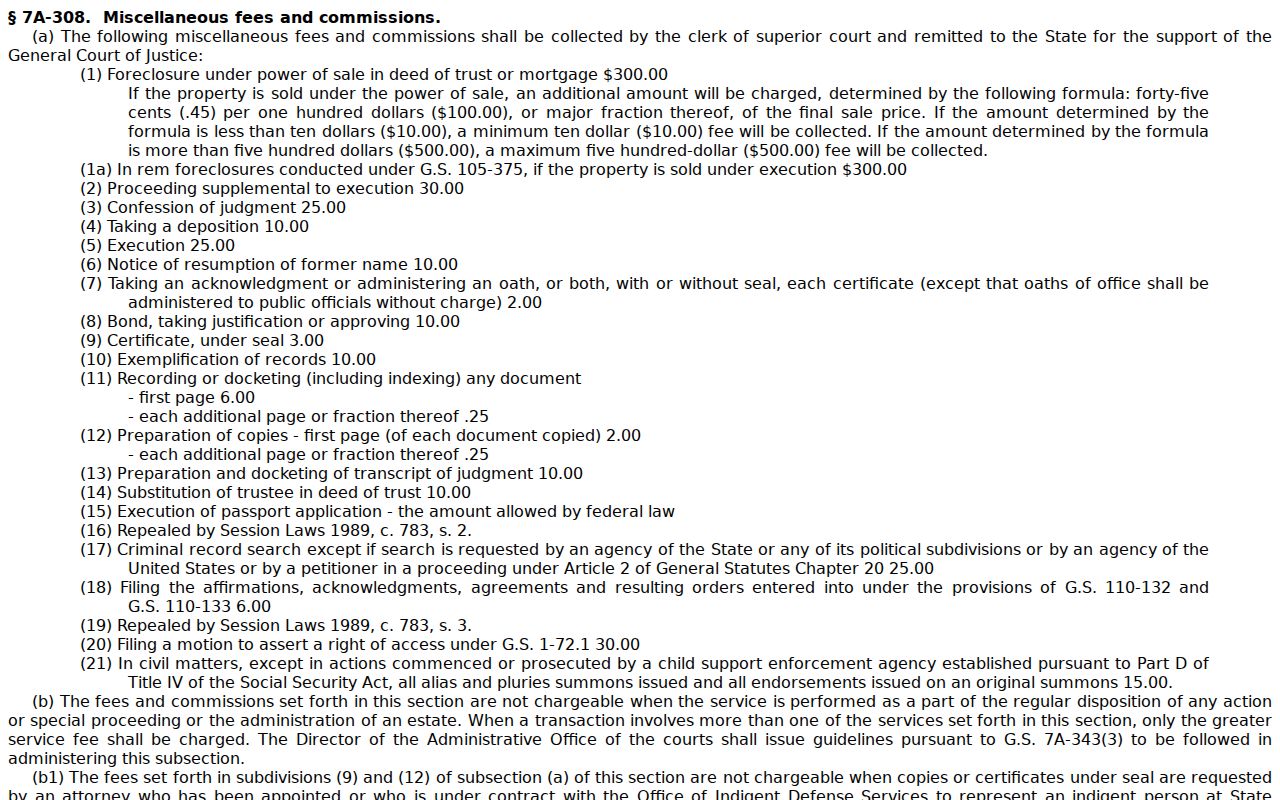
When a Carteret County civil docket search turns up a need for the official record, the clerk-copy statute governs what you can get. The public-inspection rule has its own official text.
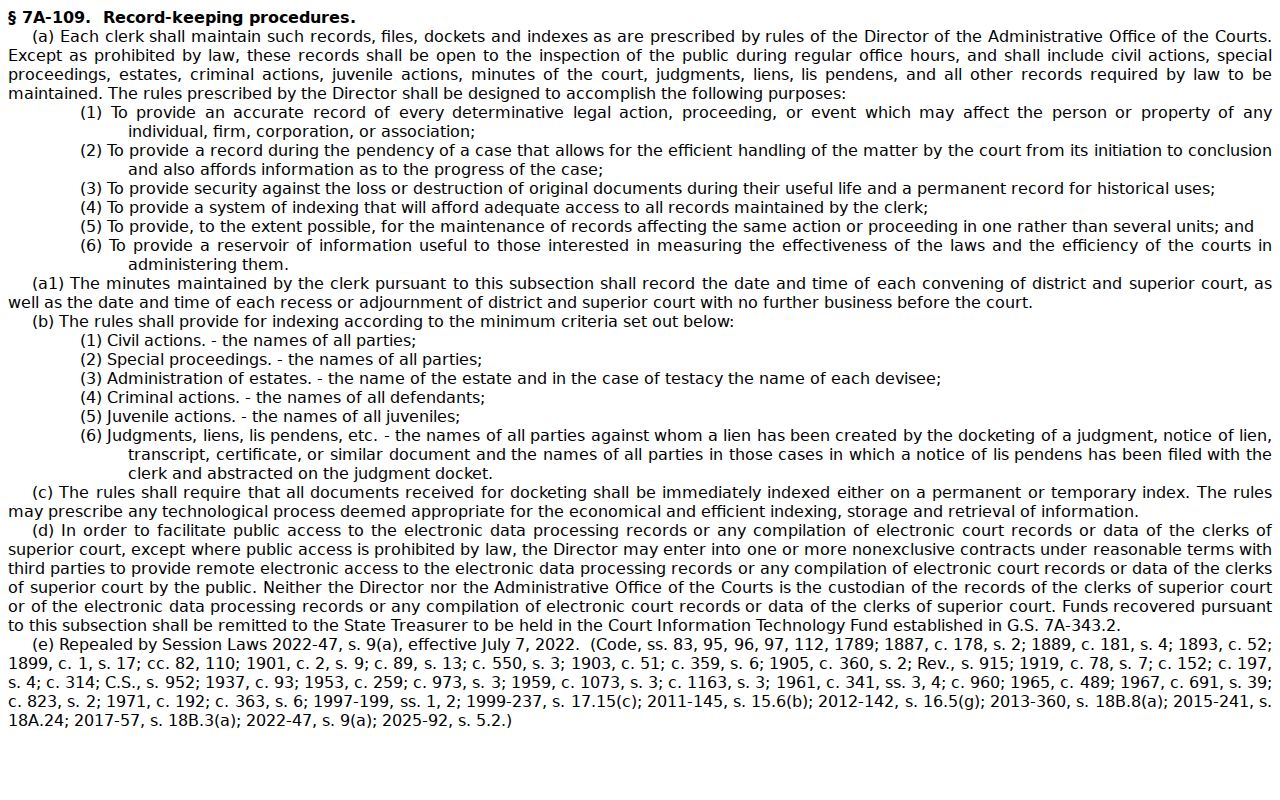
That legal baseline bends to a sealing order. It also bends to any category the law protects. Verify anything important with the Carteret County clerk, since online access may skip restricted or older material.
Carteret County civil searching follows a clear and simple local route. You move from the Carteret Portal search to Carteret Civil. Next comes the Carteret Clerk of Superior Court. The final stop is the Carteret courthouse itself. The matter may sit in Carteret Superior Court or Carteret District Court. It may also sit before a Carteret magistrate. Either way, the Carteret case number and the Carteret location keep your docket search aimed at the right record.
The civil side of a Carteret County court docket can reach beyond ordinary lawsuits. A case file may belong to Carteret Civil, Carteret Estates, or Carteret Special Proceedings. The Carteret Clerk maintains each inside the unified system. A Carteret Case Summary helps you spot a scheduled setting. Need something official? Ask for a Carteret clerk copy or a Carteret certification request.
Calendar details deserve the same local care. A Carteret Portal result answers one question. A Carteret civil calendar, a Carteret hearing search, and a Carteret Civil contact each answer a different one about your case lookup. Carteret court sessions shift, continuances happen, and document availability varies. Confirm those points through current Carteret court channels rather than assuming anything.
Public access has limits set by Carteret law and Carteret record classification. A Carteret public docket or public document may be open to you. A restricted case does not. It stays closed under the Carteret Clerk's custodial role. Questions about access go to Carteret court staff, not a city office. That keeps your Carteret County court docket search on solid ground from start to finish.