
Carteret County Court Docket Searches
Start a Carteret County court docket search at the North Carolina eCourts Portal. Pick Carteret as the location. Smart Search then accepts a record number or a party name typed Last, First Middle Suffix. Portal is the public window into the state's Enterprise Justice system. It shows publicly available Case Summaries. The Carteret Clerk of Superior Court still keeps the official county court file.
Use the notice or record in hand. A full case number is the most precise key. A citation number works through an advanced search type, and a name search can be narrowed by location, case type, status, or filing date. When nothing comes back, the reason is not obvious. The name may be misspelled, the case may be restricted, the matter may sit in a different county, or no matching public case exists. Portal does not prove which explanation is true.
- Open Portal Smart Search and enter a full case number or a party name.
- Use the Carteret location filter when the result list needs narrowing.
- Open the underlined case number to read the public Case Summary or Register of Actions.
- Use Search Hearings with a current date range to check a current setting.
- Call the right Carteret clerk division or inspect the courthouse file when an official record is needed.
Note: Portal can return up to 200 results. A broad name search should be refined rather than treated as a complete answer.
Carteret eCourts Portal Dockets
Carteret joined eCourts on February 3, 2025. The official go-live announcement lays out the whole switch at once. Enterprise Justice and Odyssey now run case management. File & Serve handles filings. Portal gives the public its search tool for hearings, judgments, and eligible payments. So a Carteret Case Summary can look current online. The clerk of court still keeps the official record on file.
North Carolina eCourts information makes clear that Portal serves the entire state. It is not just for Carteret County. Filter any result to the county. Check it against the right court level too. File & Serve exists for submitting filings, not for reading a public docket.
The Judicial Branch release spells out how the conversion rolled out across the coastal counties.
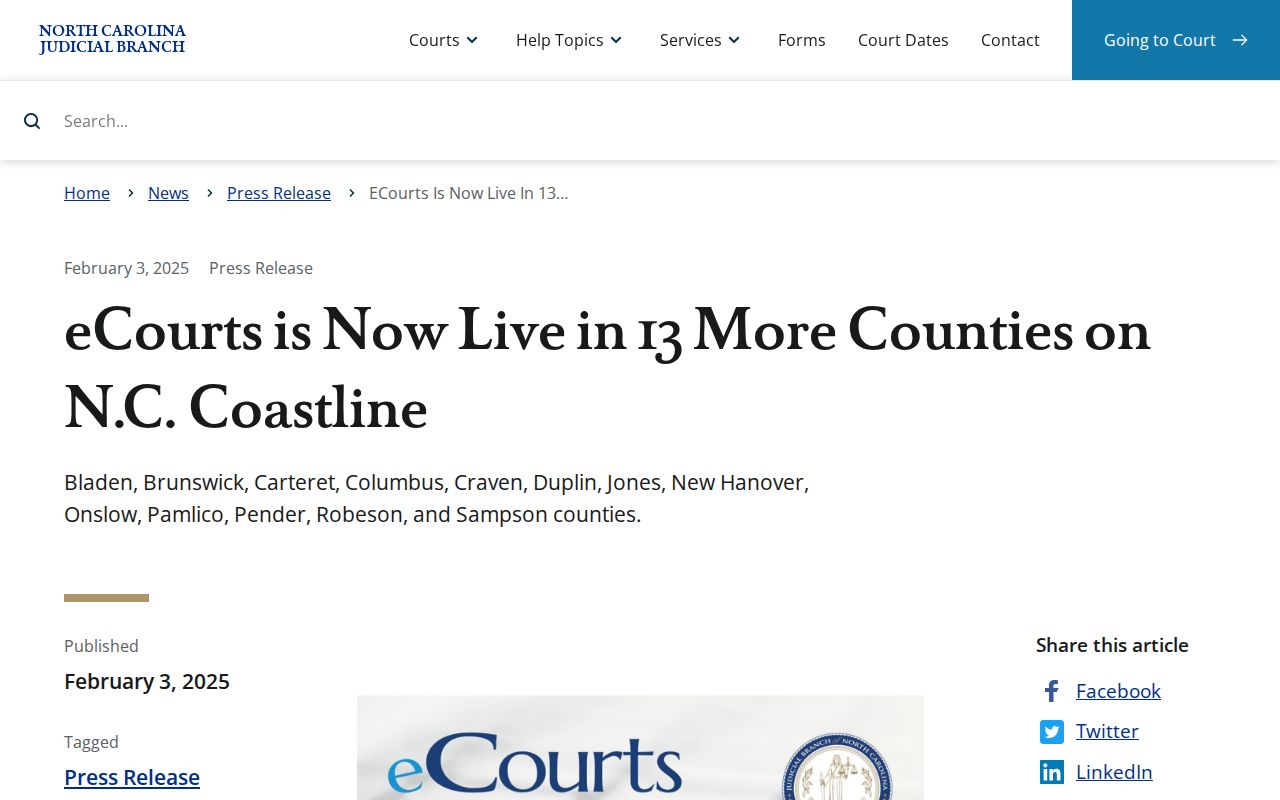
The rollout gave Carteret one shared public interface. Certified-record work stayed with the Clerk of Superior Court.
Court Dockets: What They Show
Portal calls the Carteret public docket a Case Summary or Register of Actions. Think of it as a near-real-time Carteret summary of public activity. The clerk record is where that activity is drawn from. It is not a certified copy. Which sections appear depends on the case. Civil, estate, family, and mental-health matters can carry a Cause of Action section. A criminal case does not use that field the same way. A missing Hearings or Financial Information panel does not mean there is no hearing. It does not mean there is no balance either.
| Case number | The Carteret case identifier used to open the Carteret Case Summary and distinguish a case from a broad name search. |
|---|---|
| Case and assignment information | Carteret case-level and court-assignment information where the Portal record contains it. |
| Party information | Carteret public party roles and names. Ordinary users see month and day of birth masked, and victims are excluded from normal returns. |
| Case events | The Carteret chronological Register of Actions entries recording public docket activity. |
| Hearings and disposition | Carteret sections shown when information exists, with Search Hearings available for a current-calendar check. |
| Financial information | A Carteret case-specific panel when available, not a promise that every Carteret case has a public payment block. |
A Portal printout works for tracking a Carteret docket. For a certified judgment, order, or copy, go to the Clerk of Superior Court.
Carteret Case Docket Numbers
Newer Carteret Enterprise Justice case numbers open with a two-digit year, then case-type letters, a six-digit sequence, a hyphen, and a three-digit county identifier. Carteret's identifier is 150. The non-record pattern 26CR000001-150 shows the layout only. It matches no real case. Keep the hyphen and county code with a known number. That habit helps Smart Search return the right Carteret court docket.
Older converted cases can still carry CVD for Civil General, CVM for Civil Magistrate, CVS for Civil Superior, E for estates, M for miscellaneous civil judgments, R for registration, or T for civil transcript. Do not guess a status from the letters. The Portal training materials support reading the current record and newest event instead.
Use the full identifier when possible. A precise Carteret case number is normally more reliable than a broad name search, especially when names are common.
Carteret County Courts and Their Dockets
North Carolina runs one unified court system. Carteret has no separate city courts. The Clerk of Superior Court keeps the local file path for Superior Court, District Court, magistrate, estate, and special-proceeding work. The state court-types overview gives the general structure. Carteret's location filter and clerk divisions make it useful for local searches.
| Carteret court channel | Docket covers | Where to search |
|---|---|---|
| Superior Court | Felony trials, civil matters above $25,000, and certain District Court appeals. | Carteret Portal Case Summary and Clerk of Superior Court file. |
| District Court | Misdemeanors, traffic matters, infractions, family and juvenile work, and civil matters generally at or below $25,000. | Carteret Portal, Criminal or Civil clerk division, and courthouse file. |
| Magistrates | Small claims up to $10,000, summary ejectment, initial criminal process, bail, and some minor pleas. | Carteret unified clerk record path and Portal where public. |
| Estates and special proceedings | Estate, guardianship, and special-proceeding work, subject to confidentiality limits. | Carteret Portal when public, or the specialized Carteret clerk counter. |
A criminal District Court appeal can reach Superior Court. There it gets a new trial. For final Superior Court and civil matters, the normal intermediate appellate court is the North Carolina Court of Appeals.
Carteret Criminal Docket Call
Carteret's backlog-reduction plan supplies local calendar language that a bare Portal entry may not explain. On the first day of a Carteret criminal trial term, calendar call happens at 10:00 a.m. People on the trial calendar and their attorneys generally must attend unless the district attorney excuses them. After call, the court takes pleas and hears motions. Matters not reached can be set later in the term if possible. The plan also covers a jail-case-review calendar. It sits at 2:00 p.m. on Wednesday of each criminal administrative term. Carteret civil motions are customarily heard on Mondays. Civil trials begin Monday afternoon or Tuesday. These practices explain local terms. They do not replace the exact case date in Portal, a current calendar, or clerk confirmation. A term schedule gives context. The newest hearing return or clerk confirmation gives the active setting for one case.
Court Dates and Settings in Carteret County
The Case Summary on a Carteret court docket can list a hearing. For a current cross-check, use Portal Search Hearings instead. Pick Carteret. Then pick a hearing type, and choose a search type such as case number, party, business, attorney, bar number, judicial officer, or courtroom. Enter your criterion, add a Date From and a Date To, and run the query. The system returns hearing locations and times. It does not label a return as virtual or in person.
The Carteret administrative schedules page links to current civil and criminal calendar material. Treat any printed calendar as context. A setting may have moved. A continuance changes a scheduled matter without erasing earlier Carteret docket history. Once the case is open in Portal, the Carteret County court schedule gives the full local date sequence.
Carteret Docket Hearing Checks
When an old notice and a Carteret docket event disagree, Search Hearings is the sensible second check. Start with the newest Case Event, the Hearings section, and the disposition. Then run a focused Carteret query over a current date range. Compare the result with current civil or criminal calendar material. That sequence separates a historical entry from the next active setting.
Conflicts deserve a phone call. With the case number in hand, reach the Carteret Criminal division at 252-504-4444 or the Civil division at 252-504-4422. The clerk publishes no direct Carteret Trial Court Coordinator line. Those division numbers are the local channels. Weather, a continuance, a transfer, or a court direction all warrant a reconfirmation before you appear. Reconfirm first, then appear.
- Calendar call
- The Carteret local criminal term practice in which cases on the trial calendar are called at the start of term.
- Continuance
- A Carteret postponement of a scheduled matter. Earlier hearing events stay in the case history.
- Called and failed
- A Carteret docket notation for a missed required appearance, not a substitute for checking current case status.
Docket Access Under North Carolina Law
Public access in Carteret starts with a duty. The clerk must keep dockets, files, records, and indexes. The Carteret online Case Summary is a convenient layer on top of that duty, while in-person inspection and clerk copies still matter when a public document is not displayed. Access has limits, though. Sealed material, confidential juvenile records, protected categories, and masked personal data stay closed even when another part of the record is searchable.
Key Rules:
G.S. 7A-109 requires clerks to maintain court records, dockets, and indexes and generally permits public inspection unless law prohibits it.
G.S. 132-6 provides the public inspection and copy baseline, subject to lawful fees and confidential-record rules.
G.S. 132-6.2 addresses available formats and does not require a custodian to create a record that does not exist.
G.S. 7B-3000 protects juvenile records from ordinary public inspection except as authorized by law.
Portal's public view is not an elevated-access application. A missing result can be checked with the Carteret clerk, but the clerk cannot disclose sealed or confidential contents.
Carteret Docket Access Limits
Carteret Portal shows public case information and public documents when they are available. Ordinary users never see sealed or confidential records there. According to the state's Portal FAQ, confidentiality laws and system configuration keep some court records off line. Published access restrictions cover unreturned criminal warrants, juvenile records, protective-order material, some restraining-order matters, and confidential special proceedings.
Portal is not the official court record. A public case may show no document image. An error may need clerk reprocessing. A public Case Summary is not a certified copy. The careful path: use the online return to identify the case. Then ask the clerk about the available record product. For in-person needs, the official Carteret courthouse page identifies the countywide record-access building.
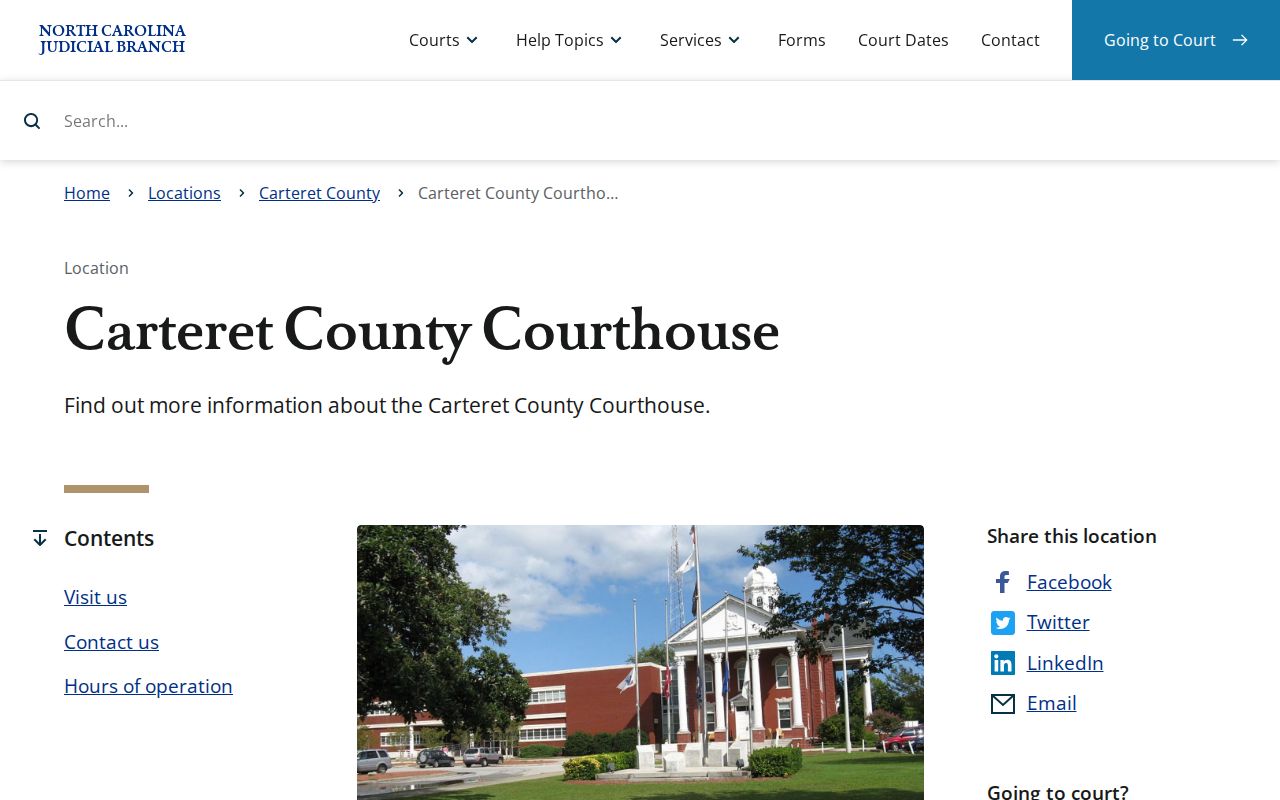
The Beaufort courthouse is the Carteret physical fallback. Inspection, copies, and certified records that Portal cannot supply are handled there.
How Clerk Keeps Docket Records
The Carteret Clerk of Superior Court is one unified office with separate practical counters. Criminal, civil, estates, special proceedings and juvenile, and cashier work are not separate county clerks. Before a visit or copy request, pick the right Carteret local channel through the official contact directory. That one step matters. It keeps a court records question from landing at a city office. City offices do not keep state files.
Carteret Clerk of Superior Court
300 Courthouse Square
Beaufort, NC 28516
252-504-4400
Call by division. Carteret criminal questions go to 252-504-4444, and civil questions go to 252-504-4422. Estates uses 252-504-4455. Special proceedings and juvenile use 252-504-4466. Cashiers use 252-504-4411. Public hours at the courthouse run 8:30 a.m. to 5:00 p.m. on weekdays. Ask the appropriate division about inspection or copy instructions before mailing any request. The Judicial Branch directory lists each Carteret phone line and channel.
Direct Carteret division contacts beat a general county switchboard every time.
Carteret Court File Fallback
The Carteret County Courthouse in Beaufort is the countywide fallback for a public court file. Find it at 300 Courthouse Square. Weekday public hours run from 8:30 a.m. to 5:00 p.m. as listed by the Judicial Branch. State judicial guidance on obtaining court records sets one basic rule. You may view a case file at the clerk office in the county where it is located. Clerk divisions can point you to the right local record route.
Visitor rules are separate from record access. Carteret's local order bars bags from the courthouse. That covers backpacks, briefcases, tote bags, messenger bags, and purses. It prohibits courtroom photographs and recordings without prior approval. It also limits wireless devices unless authorized. Entry rules do not close the docket. An otherwise public court docket stays public. The county court landing page gathers Carteret's channels in one place, including the calendar, payment, clerk, and courthouse options.
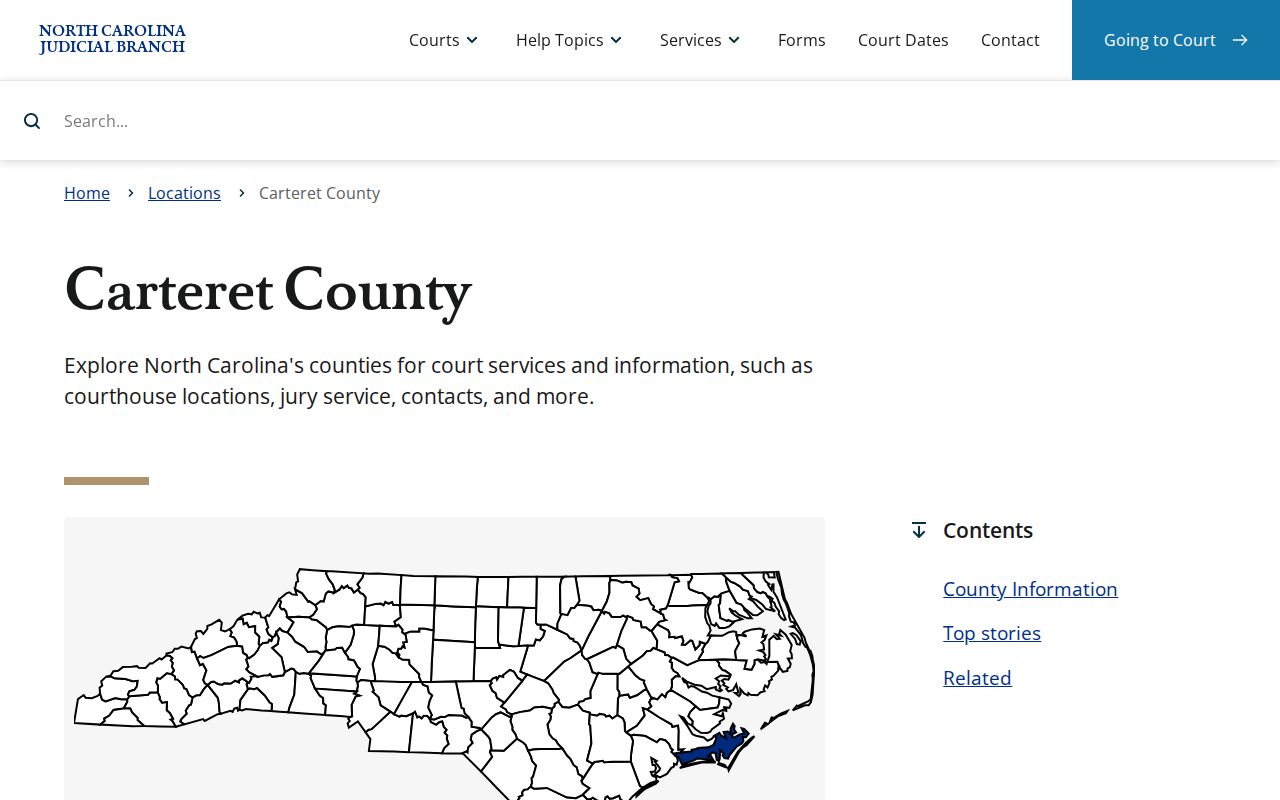
When a document is missing online, the Clerk of Superior Court and the court file are the documented Carteret alternatives.
City-by-City Court Dockets in Carteret County
Carteret County's five largest towns all keep busy administrative offices. The North Carolina Office of State Budget and Management's July 1, 2024 estimates rank them. Under that ranking, they run town halls, police departments, parking programs, permits, and code-enforcement records. What they do not run is their own municipal court docket. A city matter can turn into a state court case. It then travels the Carteret District Court and Clerk route instead. The local pages draw a clear line between city administrative records and a county court Case Summary. That distinction saves searchers real time.
Morehead City Court Records
10,207 estimated residents in 2024. The City FAQ says traffic violations are remanded to the Carteret County Clerk of Court.
Beaufort Court Records
4,980 estimated residents in 2024. Beaufort Town Hall is distinct from the Carteret state courthouse and clerk file.
Newport Court Records
4,534 estimated residents in 2024. Town compliance files are separate from the Carteret state court route.
Emerald Isle Court Records
4,082 estimated residents in 2024. Carteret seasonal parking administration is not a state court docket.
Cape Carteret Court Records
2,402 estimated residents in 2024. Carteret town enforcement channels do not create a city court database.
Carteret City Court Docket Routes
A search by town name can feel city-specific. That holds in Morehead City, Beaufort, Newport, Emerald Isle, and Cape Carteret. Carteret's unified court structure keeps the judicial route at the county level, though. Morehead City states plainly that traffic violations are remanded to the Carteret Clerk. Beaufort Town Hall is not the courthouse, even though both sit in Beaufort. Some matters never touch the Portal. Emerald Isle beach parking, Cape Carteret recreation rules, and city code processes flow through their own administrative channels rather than automatic Portal case numbers.
Match the paper to the system. A document bearing a Carteret citation number, case number, or state court date belongs in Carteret Portal, Search Hearings, the county calendar, or the clerk file. No court filing means no court case. A town permit, parking program, tax matter, or code-enforcement notice belongs with the city department that issued it. A court matter filed later can be searched. That happens once it receives a Carteret judicial record.
Note: These municipalities maintain no city-run court calendar, municipal judge, or city court search portal.
Carteret Court Record Layers
Three layers make up Carteret County court records, and each answers a different question. Smart Search and the Case Summary sit on top. They identify the Carteret case. They track public events, and they open up hearing and financial details the clerk has released. One layer down sits the filed document itself. When its classification allows, a public document can be viewed right through the portal. The certified copy is a different animal. That is a clerk product, priced by the clerk fee statute at $2.00 for the first page of a clerk-prepared copy. Each additional page costs $0.25. Certificates and exemplifications are billed as separate services.
So how do you pick a path? Go after the Carteret court records route whenever the item you need sits behind the Case Summary. It may not sit inside it. One caution: the Judicial Branch's public-record form covers administrative records only. It states that county case documents belong with the local clerk. For the county copy and certification route, the Carteret County court case records page walks through the details.
For the wider public access layer around any Carteret County court docket, the Carteret state eCourts page lays out the state system's approach to public access.
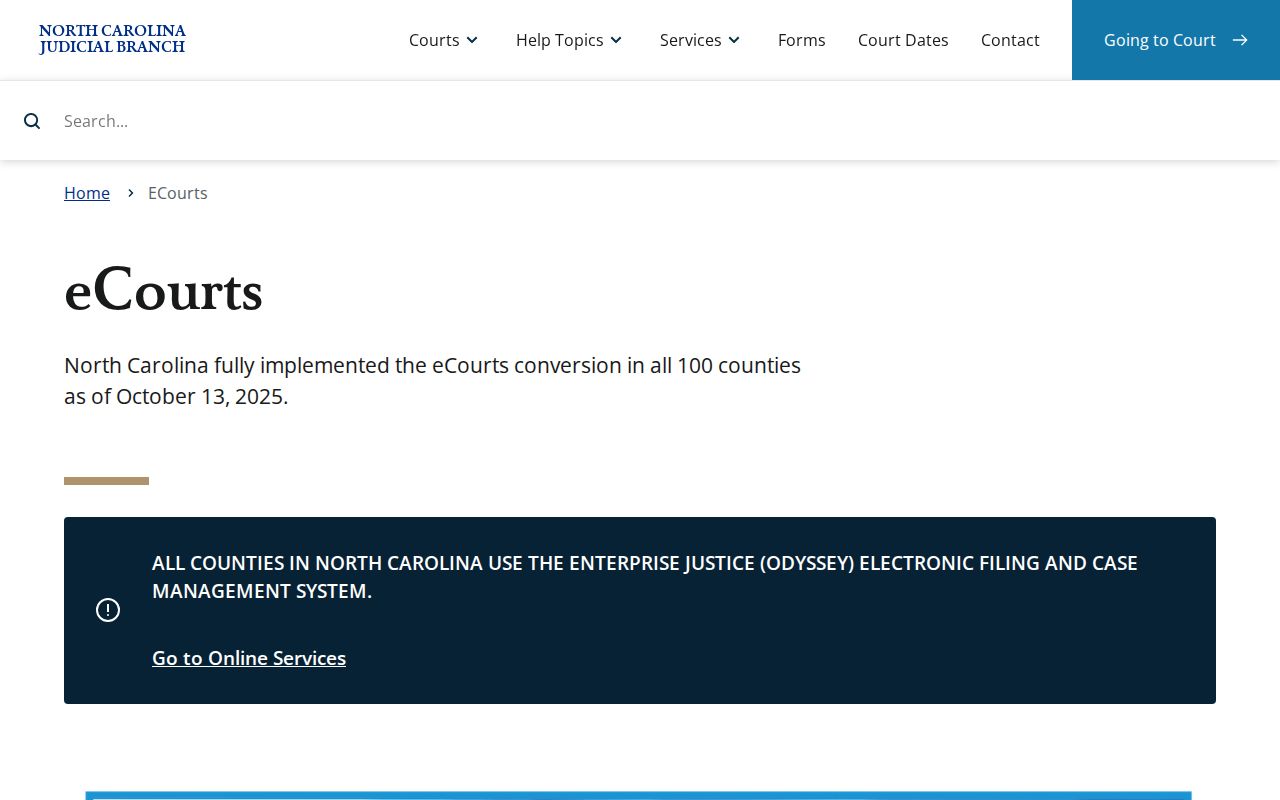
Carteret online access and clerk-certified access work together, yet they remain distinct record products.
Federal Dockets for Carteret Cases
A Carteret state court docket and a federal docket are two different things. Federal cases come in civil, criminal, bankruptcy, and appellate flavors. They live in federal systems like PACER and CM/ECF. A state case sitting in the Carteret Clerk file will not surface on a federal docket screen. No search method changes that. Likewise, a federal case does not appear just because Carteret was where something happened.
The Eastern District of North Carolina CM/ECF information page describes the federal docket environment. PACER pricing information covers the fees for public access. Before you search, match the caption, court name, and case number to the correct system.
The federal CM/ECF screen is its own separate record-access system. The federal courts run it.
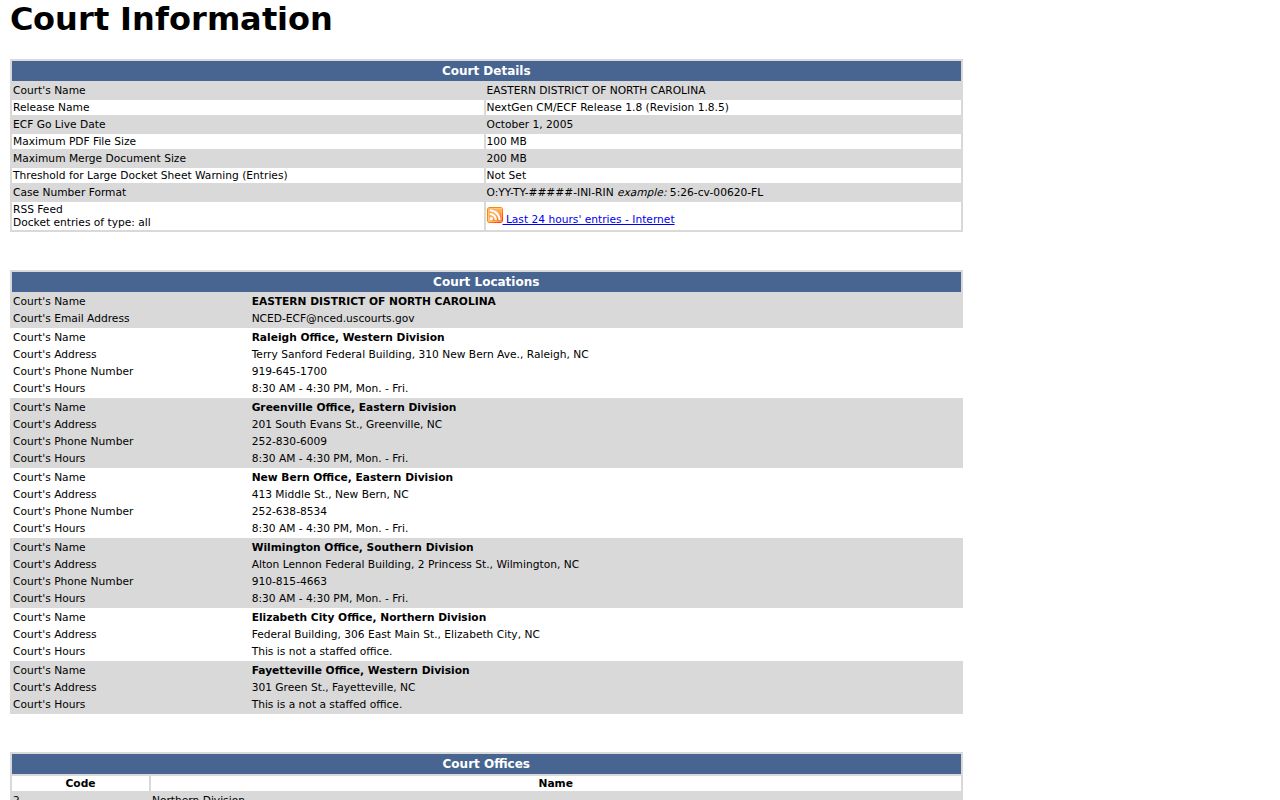
This is why a Carteret Clerk case starts with the North Carolina Portal, not a federal lookup. The PACER fee page also lays out the federal service's distinct access rules.
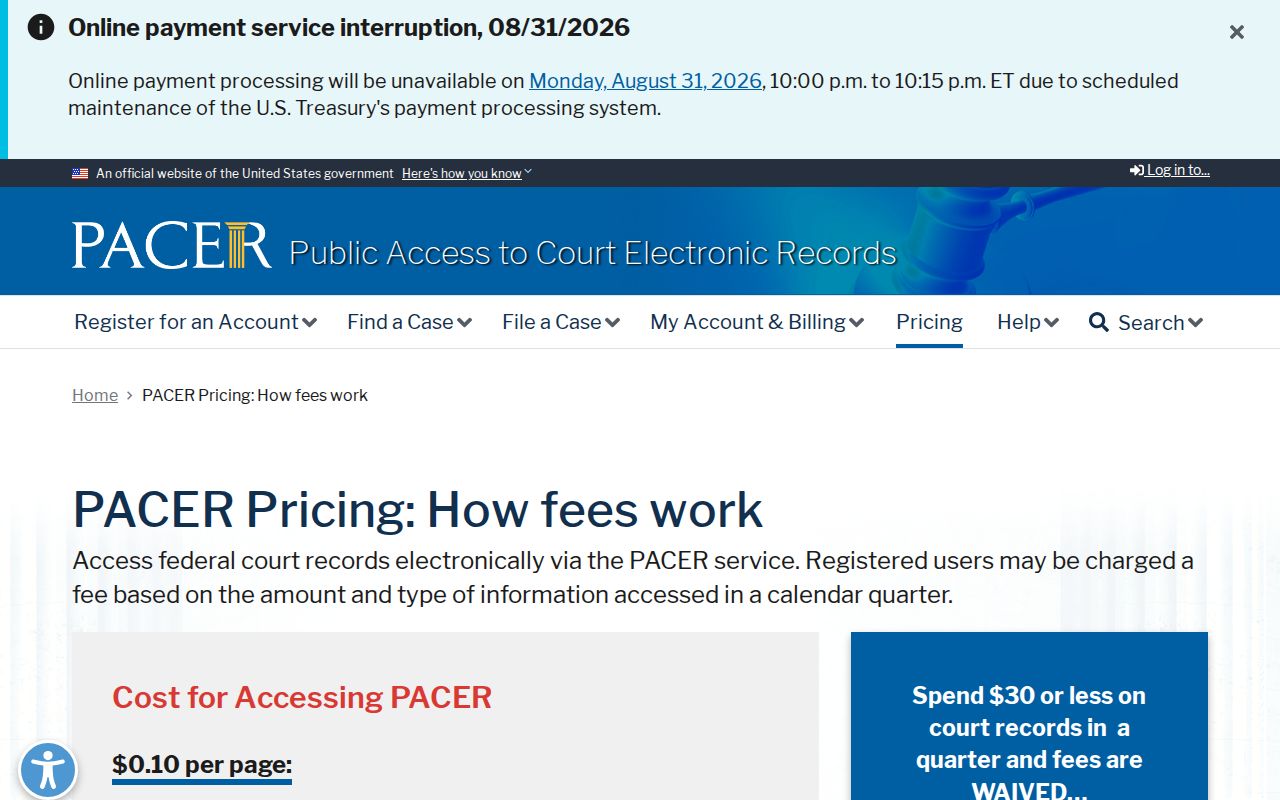
Reach for the federal service only when the matter is truly in federal court. It is no substitute for a Carteret state court record.
Map and Directions to the Carteret County Courthouse
Superior and District Court files for Carteret County are kept by the Clerk of Superior Court at the Carteret County Courthouse, 300 Courthouse Square, in Beaufort. The clerk's office splits into division counters reached at the same courthouse: Civil at 252-504-4422, Criminal at 252-504-4444, Estates at 252-504-4455, Special Proceedings/Juvenile at 252-504-4466, Magistrates at 252-504-4543, and Cashiers at 252-504-4411. Identifying the case type before calling routes the question to the right counter faster than the main line.
Carteret County Courthouse
300 Courthouse Square
Beaufort, NC 28516
252-504-4400
Monday through Friday, 8:30 a.m. to 5:00 p.m.
A local administrative order bars backpacks, briefcases, tote bags, and similar bags from the courthouse, sets a courtroom dress code, and prohibits photographing or recording a proceeding without prior court approval. Phones and wireless devices are barred from a courtroom unless authorized, and children under 12 may not enter a courtroom unless directly involved and supervised. No parking or security-screening policy is separately published, so calling ahead is worthwhile.